There’s a headline from Forbes that captures the scale of what’s happened: “Student Expectations To Attend College Plunge To New 20-Year Low.”
In 2002, about 72% of high school students in the US figured they would earn a bachelor’s degree . By 2022, that number kind of sank to 44% . When you look at first generation students, it went from 60% down to 33% , across the same stretch of years.
This isn’t a blip. It’s a structural shift, driven by a generation that grew up watching student debt numbers climb, graduate into a pandemic, and question whether a traditional four-year degree was actually worth what institutions were charging for it.
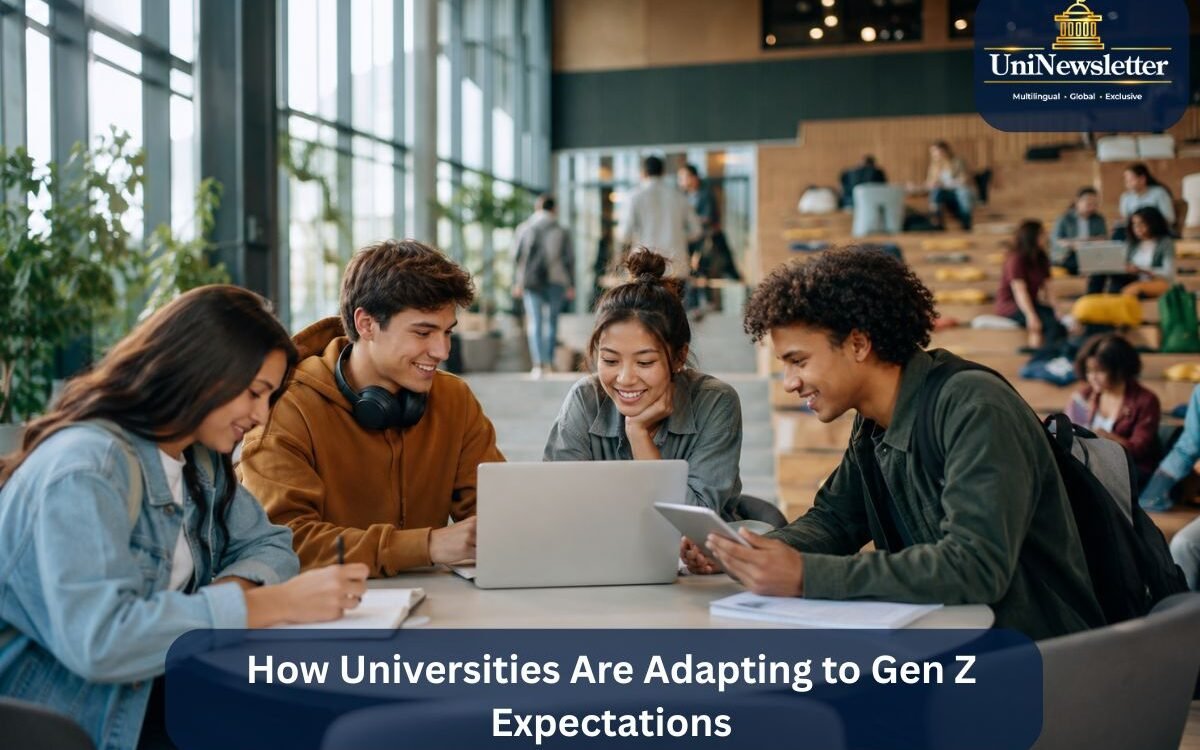
Gen Z is now the dominant population in higher education globally. They make up more than a quarter of the global labour force as of 2025 according to the Lumina Foundation. Universities that understand what this generation actually wants, and what they won’t accept, are the ones building strong pipelines. The ones that don’t are watching enrolment figures quietly decline.
This blog covers what Gen Z students actually expect, how universities are responding, and what the higher education landscape looks like for the generation that’s already reshaping it.
Who Are Gen Z Students?
Gen Z includes the people born between the years of 1996 and 2012. They were probably the first generation raised in an environment where having a smartphone, accessing social media platforms and surfing the internet at any given moment were considered as basic human needs, rather than an adopted habit. They grew up in the time of the 2008 financial crisis that hurt the people in their household, through the period of the Covid-19 pandemic that disrupted their schooling, and in a world where most of our career-related advice from a decade ago can be disregarded because of the rate of technology development.
A few things make them different from millennials in education:
- They tend to be very practical in choosing their studies, focusing more on what university gives them at the end, rather than just the experience.
- On financial caution, per the 2026 Hanover Research study, one out of two Gen Z teens (47%) thinks that post-secondary education should last less than four years.
- About digital proficiency, they’re a generation with such a complete digital transition that they start questioning the traditional way organizations operate, communicate, apply technology, and provide services.
- The World Economic Forum states that compared to the salary, Gen Z more often puts their mental health, work-life balance, and a sense of belonging at the top of their priority list.
- Around seventy percent of high school students prefer to control their learning path and future rather than following societal norms, as stated by the results of the study carried out by ECMC Group.
Understanding this foundation is the starting point for any university trying to adapt its offer, its communication, or its experience design.
Why Gen Z Is Changing Higher Education
On one side: 80% of college students rate the quality of their education as good or excellent in 2025-26 data from Inside Higher Ed. Gen Z students are, on the whole, optimistic about higher education when they’re in it.
On the other side: only 33% of recent graduates believe their education was worth the cost, according to Cengage Group’s 2025 Graduate Employability Report. Two-thirds of Americans say a four-year degree isn’t worth the cost because graduates leave without a specific job and with significant debt.
That gap, between satisfaction inside higher education and doubt about whether it’s worth entering at all, is the core problem universities are navigating right now.
Digital Expectations of Gen Z Students
The digital expectations of Gen Z students aren’t extravagant. They want:
- Immediate, accurate information – if they have to dig for something on a university website, that’s friction they didn’t expect
- Mobile-first experiences – they research, apply, and communicate primarily on their phones
- Personalised communication – generic mass emails register as noise; personalised outreach based on what they’ve actually expressed interest in registers as relevant
- Fast responses – response times that feel normal to an admissions office can feel interminably slow to a generation that gets instant answers from virtually everything else they use
- Video-first content – short-form video is how Gen Z consumes information; universities that communicate primarily through long-form text are communicating in a format this generation actively deprioritises
The universities adapting fastest are investing in digital infrastructure, not just websites, but CRM systems that enable personalisation at scale, chatbots for immediate first-response, and social media presences that feel genuinely human rather than institutionally polished.
How technology will redefine higher education in the next five years explores the infrastructure implications of this shift in more depth.
Flexible Learning Models and Hybrid Education
Gen Z wants choice. According to the Higher Education Research Institute at UCLA, Gen Z students expect to directly apply what they are learning using a variety of tools and platforms, not sit in a lecture hall for an hour in a one-directional information transfer.
Specifically, the models gaining traction in institutions responding to Gen Z include:
- Hybrid and blended learning – key lessons are provided online, while face-to-face time is saved for the activities like discussion, practical application, and cooperation.
- Competency-based progression – the change in content is driven by what can be demonstrated at that moment rather than by the time spent learning.
- Shorter, modular credentials – stackable certificates and micro-qualifications that provide proof of specific skills without requiring four years of commitment upfront
- Project-based learning – learning by doing real work, not just studying the theory of it
Career Readiness Is a Top Priority
This is probably the clearest single message from the Gen Z data: they view university as preparation for a career, full stop. Not as a personal development journey, not as a social rite of passage, primarily as preparation for work.
According to the Higher Education Research Institute at UCLA, 57% of Gen Z students expect college to prepare them for a specific career. And yet: 1 in 5 graduates say their education programme did nothing to help foster career connections, and 36% wish their institution had helped them get a job after graduation, per Cengage Group’s 2025 findings.
The universities are aware of the great discrepancy in career outcomes between expectations and realities, which explains the changes they have made to their offerings. Here are a few examples of the adaptations:
- The work placements and internships are part of their degree programmes and are not just extra activities.
- Curriculum design with the involvement of employers is happening where students learn what the industry needs through employer feedback.
- Career service provision beginning from the first year, not in the last year of the study programme.
- Careers, business ideas, or entrepreneurial support programs are also being introduced on the student campus. The move is to meet increased Gen Z interest in being self-employed.
- Universities have started to include graduate employment monitoring and reporting to give prospective students a better picture of the post-graduation career prospects before enrolment.
As a guide to international students, the report Top in Demand Careers for International Graduates in 2026 is a companion reading.
Mental Health and Student Well-Being
Gen Z is notably more open about mental health than any previous generation, and more likely to select or deselect a university based on what mental health support looks like before they arrive.
What Gen Z students expect from university mental health provision:
- Accessible counselling with reasonable waiting times (not weeks-long queues that functionally deny access)
- Proactive mental health programmes built into the curriculum, not just reactive support when something goes wrong
- It would be nice if Gen Z did not have to fight for community and feel like one belongs as much as the institution actually does not recognize it.
- The problems caused by academic pressure, financial difficulties, and social problems are compounded, In particular for international students.
The ones responding well to the situation universities are putting well-being at the centre of the culture while others are considering it only a welfare.
Diversity, Inclusion, and Social Responsibility
Gen Z is arguably the most diverse group in contemporary history, and they present their diversity to the institutions they think of going to as if it is their right.
Universities are responding through:
- Diversifying faculty and leadership – Gen Z notices representation at the top of institutions, not just in student bodies
- Curriculum decolonisation – reviewing what’s taught and whose perspectives are centred
- Clear institutional positions on social issues – Gen Z expects universities to have and express values, not remain neutral on everything
- Visible sustainability commitments – this generation has grown up with climate anxiety as a background fact, and greenwashing is easily spotted
How Universities Are Adapting Recruitment Strategies
Gen Z students are being attracted through completely new and different means by universities that are having the greatest numbers. Or, at least, it is fair to expect that the ones who are succeeding must have changed their approach somehow.
The key shifts include:
Social media as a primary channel, not secondary. Prospective students can learn about universities through Instagram and TikTok now. Besides the obvious fact, that such is the nature of a dissemination channel, in a real sense, it also works as one of the types of communities. The ones producing content that looks like they are the university marketing team will likely have a lower appeal than the ones presenting their stories naturally, To be exact, and being led by the students themselves.
Peer-to-peer communication. Gen Z trusts people their age more than institutions. Current students and recent graduates as advocates, speaking genuinely about their experience, convert better than any university-produced content.
Transparency about cost and outcomes. Gen Z does due diligence. Universities that publish clear information about total costs, scholarship availability, and graduate employment outcomes build more trust with this generation than those that bury the numbers.
Community before enrolment. Online communities where prospective students can connect with current students, ask questions, and build relationships before they commit are becoming a standard part of the recruitment toolkit at universities that understand this generation.
Top strategies universities use to attract international students and why university brand reputation is your most powerful recruitment tool both go deeper on the institutional side of this conversation.
The Role of Technology and AI in Student Experience
Gen Z is the first generation entering university with a full understanding of AI as a functional everyday tool. 92% of students now use AI tools in some form according to HEPI’s 2025 data, and the expectation is that universities will integrate AI thoughtfully into the student experience rather than treating it as a threat to be managed.
What Gen Z expects from university AI integration:
- Transparent, fair AI policies – ambiguity around when and how AI can be used in academic work creates anxiety; clarity creates trust
- AI as a learning tool, not just an administrative one – personalised tutoring, feedback tools, accessibility support
- Curriculum that teaches responsible AI use – not just tool familiarity, but genuine AI literacy as a professional skill
- Assessment redesign that accounts for the reality of AI-assisted work rather than trying to pretend AI doesn’t exist
Challenges Universities Face in Meeting Gen Z Expectations
It would be dishonest to present this as a simple adaptation story. Universities face real structural challenges in responding to Gen Z expectations, and many of them are long-standing problems that require more than a social media rebrand to fix.
Cost and value tension. Tuition fees have risen significantly while Gen Z’s confidence in the return on that investment has declined. Reducing fees isn’t viable for most institutions; demonstrating value more clearly and delivering on career outcomes is the only realistic lever.
Legacy infrastructure. Many universities are operating with administrative systems, physical infrastructure, and curriculum structures built for a different era. Overhauling these takes time, investment, and institutional will that can be hard to generate across faculties with different priorities.
Speed mismatch. Universities operate on academic cycles and committee governance structures. Gen Z moves faster. The response time gap between what students expect and what institutions can deliver creates persistent friction.
International recruitment complexity. Top challenges universities face in entering new recruitment markets covers the specific barriers that make recruiting internationally, where Gen Z expectations also apply, often alongside language, visa, and cultural adjustment factors, a distinctly complex undertaking.
The Future of Higher Education for Gen Z
The most likely shape of the next decade in higher education:
- More collaboration between universities and companies – industry involvement in shaping the curriculum, assured employment opportunities, hiring of graduates directly
- Credentials beyond degrees – micro-qualifications, digital badges, and stackable certificates becoming genuinely valued in the labour market
- AI-integrated learning as standard rather than experimental
- Mental health and belonging built structurally into institutional design rather than offered as optional services
- More international options as Gen Z considers study destinations – the traditional Big Four (US, UK, Australia, Canada) facing competition from institutions in Germany, Singapore, UAE, and South Korea that are responding to what Gen Z students actually want
Universities listed on UniNewsletter span every major study destination globally, with profile information that helps students compare institutions on the things that matter to Gen Z, not just rankings.
Conclusion
Gen Z is not actually very challenging to understand. What they mostly look for is tangible benefits for the time and money they put in, straightforward communication, career-oriented education, technology that functions properly, mental health support, and organizations that represent and validate who they are.
What’s challenging for universities is that most of these expectations require structural change, not cosmetic adjustment. The institutions that are growing their Gen Z enrolment are the ones that started those structural conversations five years ago and are now delivering on them.
For universities that haven’t, the good news is that Gen Z students are, as the Lumina Foundation notes, genuinely optimistic about higher education, they want to be there. The opportunity to earn and keep that trust is still very much open.
Frequently Asked Questions
What does Gen Z expect from universities?
Students that were born after 2000 consider that the university should offer them modern, up to date technology and tools. If a university gives outdated digital learning or teaching technologies, such as paper-based learning, or not having online platforms for students where they can see the course content and their assignments easily, it might make a student think they should choose another university that does.
Why is higher education changing?
Due to several reasons like increasing study expenses, demand from the labour market for new types of skills and competencies, the changed expectations towards flexibility in education after the pandemic, and a generation who are digital natives have made universities to reconsider almost every aspect of their operations, from marketing to student support recruitment teaching, etc. UniNewsletter also discusses what the next five years will hold on the higher education landscape.
How do universities attract Gen Z students?
The approaches that work include peer-led social content, transparent outcome data, personalised digital communication, clear scholarship and cost information, and community-building before enrolment. UniNewsletter publishes research-backed strategies for universities, top strategies universities use to attract international students is a useful starting point.
What technology do Gen Z students expect at university?
Mobile-first platforms, fast digital communication, AI-integrated learning tools, personalised portals, and clear policies on AI use in academic work. Gen Z notices when a university’s technology feels dated, it signals that the institution isn’t investing in the student experience.
Why is mental health important to Gen Z?
Members of GenZ open up more about their mental health issues than previous generations and are more conscious about In reality support is a determining factor when it comes to choosing a university. For foreign students who have to deal with a completely different academic and national environment, it is just another reason to pick a university that gives sufficient, easily accessed, and top quality mental health services.
How can I find universities that are genuinely adapting to Gen Z expectations?
UniNewsletter provides detailed profiles of universities across major study destinations worldwide, helping students compare institutions based on country, academic field, student support services, career outcomes, and digital learning experiences. Explore the UniNewsletter University Directory to discover universities that are investing in the personalised support, technology, and student experience that matter most to Gen Z learners.







 Featured Video